Biography & Early Wealth Journey
Fred Dryer accomplished the rare feat of becoming highly successful in two completely different careers. He first spent 13 seasons as a defensive end in the NFL, primarily with the Los Angeles Rams, recording 103 career sacks and becoming the only player in NFL history to record two safeties in a single game.
After retiring from football, Dryer successfully reinvented himself as an actor. He nearly landed the role of Sam Malone on "Cheers" before Ted Danson was cast, but Dryer soon found an even more natural vehicle as Detective Sergeant Rick Hunter on the NBC crime series "Hunter." The show ran for seven seasons from 1984 to 1991 and turned Dryer into a major television star.
"Hunter" also dramatically increased Dryer's earning power. He was making roughly $21,000 per episode during the show's early seasons before a contract battle pushed his salary to $50,000 per episode beginning with the third season. At that rate, a typical 22-episode season generated around $1.1 million in acting salary alone. Dryer later became an executive producer and directed episodes of the show.
His success also showed up in real estate. In 1988, Dryer paid more than $1 million for nearly an acre in the gated Mulholland Estates development above Beverly Hills, where he built a 10,000-square-foot mansion that was estimated to be worth about $5 million by 1991.
Early Life
John Frederick Dryer was born on July 6, 1946, in Hawthorne, California. He attended Lawndale High School and began his college football career at El Camino Junior College before transferring to San Diego State University.
At San Diego State, Dryer played defensive end under head coach Don Coryell. Future NFL coaching and broadcasting legend John Madden, who was then the team's defensive coordinator, helped recruit him.
At 6-foot-6 with exceptional speed, Dryer became one of the country's top small-college defensive players. He earned Little All-America honors in 1968 and participated in the East-West Shrine Game, Hula Bowl, and College All-Star Game. One of his San Diego State teammates was future NFL player and actor Carl Weathers.
Trending Wealth Dossiers:
Real Estate, Luxury Assets & Personal Investments
Dryer was inducted into the College Football Hall of Fame in 1997.
NFL Career
The New York Giants selected Dryer with the 13th overall pick in the first round of the 1969 NFL Draft. He immediately became the team's starting right defensive end and developed into one of the NFL's most effective pass rushers.
Dryer spent three seasons with the Giants before being traded to the New England Patriots in 1972. His stay in New England was brief, and the Patriots subsequently traded him to the Los Angeles Rams.
Wealth Trajectory & Future Earnings Projections
The move brought Dryer back to Southern California and began the longest chapter of his football career. He spent ten seasons with the Rams and became an important part of a defense that was among the NFL's strongest units throughout much of the 1970s.
On October 21, 1973, Dryer made NFL history against the Green Bay Packers. He tackled quarterback Scott Hunter in the end zone for a safety and later recorded a second safety against backup quarterback Jim Del Gaizo. No other player in NFL history has recorded two safeties in one game.
Dryer was especially dominant in 1974, recording 15 sacks and tying for the NFL lead. He was named second-team All-Pro that season and earned a Pro Bowl selection following the 1975 season.
The Rams reached Super Bowl XIV after the 1979 season, losing to the Pittsburgh Steelers. Dryer remained with Los Angeles through 1981.
Because sacks did not become an official NFL statistic until 1982, most of Dryer's career came before they were formally tracked by the league. Subsequent historical research credits him with 103 career sacks in 176 regular-season games.
NFL Salary
Dryer played during an era when even prominent NFL players earned a fraction of the salaries paid to modern stars. By the end of his career, however, he was making significant money for the period.
Dryer's 1981 contract with the Rams paid him $220,000 per year. The deal contained unusual protections that made it difficult for Los Angeles to release him without continuing to pay him.
Those protections dated back to a contract Dryer negotiated several years earlier. When he became a free agent, another team offered him substantially more money to leave Los Angeles. Dryer instead accepted a lower salary from the Rams in exchange for a five-year guarantee that he would remain on the roster.
Football was not his only business interest. During his playing years, Dryer was also involved in commercial and industrial real estate development during the offseason, an early indication that he was thinking beyond his NFL paycheck.
Ultimately, the income Dryer earned from football would be eclipsed by what he made in television.
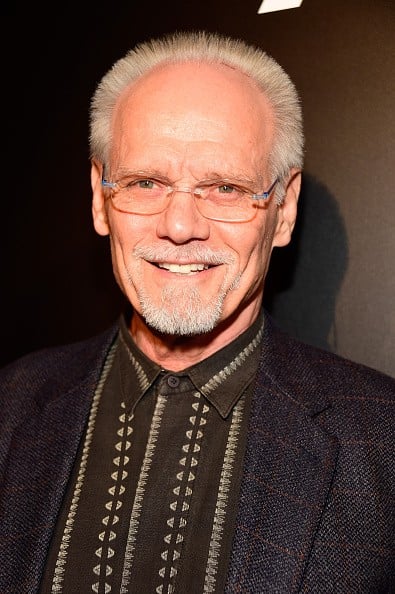
Frazer Harrison/Getty Images
Transition to Acting
Dryer developed an interest in acting before his football career was over and studied the craft while he was still playing. After retiring from the NFL, he briefly worked as a football commentator for CBS while pursuing acting roles.
His early television appearances included "Laverne & Shirley," "CHiPs," and "Hart to Hart." He was also considered for the role of Sam Malone on a new NBC sitcom called "Cheers."
Sam was originally envisioned as a former professional football player, making Dryer a natural candidate. The producers eventually chose Ted Danson and rewrote the character as a former baseball player. Dryer later appeared on several episodes of "Cheers" as sports broadcaster Dave Richards.
He received a major opportunity from producer Stephen J. Cannell, who cast him in "The Rousters." Cannell subsequently chose Dryer to star in a new police drama that would become "Hunter."
"Hunter"
In 1984, Dryer began starring as Detective Sergeant Rick Hunter on NBC's "Hunter." Stepfanie Kramer co-starred as Detective Sergeant Dee Dee McCall.
The series initially struggled in the ratings and was briefly pulled from NBC's schedule. After returning in a different time slot and undergoing creative changes, "Hunter" found an audience and became a staple of NBC's Saturday-night lineup.
Dryer's imposing physical presence made him a convincing action star, but as the series matured, "Hunter" developed beyond its original image as a straightforward "Dirty Harry"-style police drama.
The show ultimately ran for seven seasons and more than 150 episodes.
"Hunter" Salary
Dryer's "Hunter" salary became the subject of a major contract dispute before the show's third season.
During the first two seasons, Dryer was earning roughly $21,000 per episode. With the series becoming increasingly successful, he demanded both a substantial raise and greater creative control.
Stephen J. Cannell's production company responded by filing a $20 million breach-of-contract lawsuit and prepared for the possibility of replacing Dryer. NBC, however, recognized the difficulty of continuing a show called "Hunter" without the actor playing Hunter.
The dispute ended with Dryer receiving approximately $50,000 per episode.
At $50,000 an episode, a 22-episode season paid roughly $1.1 million. If Dryer had merely remained at that rate for the rest of the series, his acting salary from "Hunter" would have run into several million dollars. His compensation became even more valuable as he expanded his responsibilities behind the camera.
Dryer directed multiple episodes and served as an executive producer during the show's final seasons, giving him income and influence beyond his salary as an actor.
After the original series ended, Dryer continued earning money from the character. He returned for the 1995 television movie "The Return of Hunter: Everyone Walks in L.A.," followed by "Hunter: Return to Justice" in 2002 and "Hunter: Back in Force" in 2003. NBC also attempted a brief "Hunter" revival in 2003.
Mulholland Estates Mansion
Dryer's television success coincided with an ambitious move into luxury Los Angeles real estate.
In 1988, while "Hunter" was one of NBC's established shows, Dryer bought a double lot totaling nearly an acre in Mulholland Estates, a newly developed gated community in the hills above Beverly Hills. He paid a little more than $1 million for the land.
Dryer then built a roughly 10,000-square-foot California Spanish-style mansion. The five-bedroom, seven-bathroom home featured a wine cellar, staff quarters, swimming pool, and a hydraulic parking lift that allowed six cars to fit into a three-car garage.
By 1991, while the house was nearing completion, its value was estimated at approximately $5 million.
The property represented an extraordinary increase in lifestyle from Dryer's earlier football days. His business partner once noted that Dryer had lived in a van during part of his Rams career and described the Mulholland mansion as a symbol of what he had achieved after leaving professional football.
Dryer listed the mansion for $3.8 million in 1993. By that point, he had already purchased another vacant parcel nearby and was considering building another home. Dryer eventually sold the Mulholland property several years later. A subsequent owner sold it in 1999 for nearly $4.6 million.
Producing Career and $2.5 Million Jury Award
After "Hunter," Dryer increasingly focused on producing his own projects rather than simply working as an actor for hire.
Following the end of the original series, he formed his own production company and developed television movies. In the early 1990s, he entered into deals involving projects for NBC and Paramount.
In 1995, Dryer created, produced, and starred in the syndicated detective series "Land's End." He played private investigator Mike Land, with much of the series filmed in Cabo San Lucas, Mexico.
A business dispute connected to his post-"Hunter" production career eventually resulted in another notable financial event.
In 1997, a jury awarded Dryer $2.5 million in a lawsuit against Skyvision Entertainment. Dryer argued that the production company had reneged on a promise to finance a movie in which he was supposed to appear. The same jury awarded Skyvision $200,000 on a counterclaim involving cost overruns on "Land's End."
Other Acting Work
Outside of "Hunter," Dryer appeared in films including "Cannonball Run II," "Death Before Dishonor," "The Independent," "Highway 395," "Suits on the Loose," and "Snake & Mongoose."
His television credits include appearances on "Diagnosis Murder," "Justice League," "Accidentally on Purpose," "The Exes," "The Millers," "Crisis," "Agent X," "Marvel's Agents of S.H.I.E.L.D.," and "NCIS." In 2018, he appeared as Sheriff Lock in the film "Bumblebee."
Dryer also remained involved in sports media and became the host of "The Fred Dryer Show," discussing professional and college sports with broadcaster Michael Horn.
Personal Life
Fred Dryer married actress and model Tracy Vaccaro in 1983. They had one daughter, Caitlin Nell Dryer, before divorcing in 1988.
Dryer's career has been unusually lucrative because his most successful entertainment years came after an already lengthy professional sports career. He went from earning $220,000 in his final NFL season to earning around $50,000 per episode on "Hunter" only a few years later, while simultaneously expanding into producing, directing, and high-end Los Angeles real estate.
/2014/02/GettyImages-493495728.jpg)
Dryer
/2014/09/GettyImages-75574663.jpg)
Umenyiora